
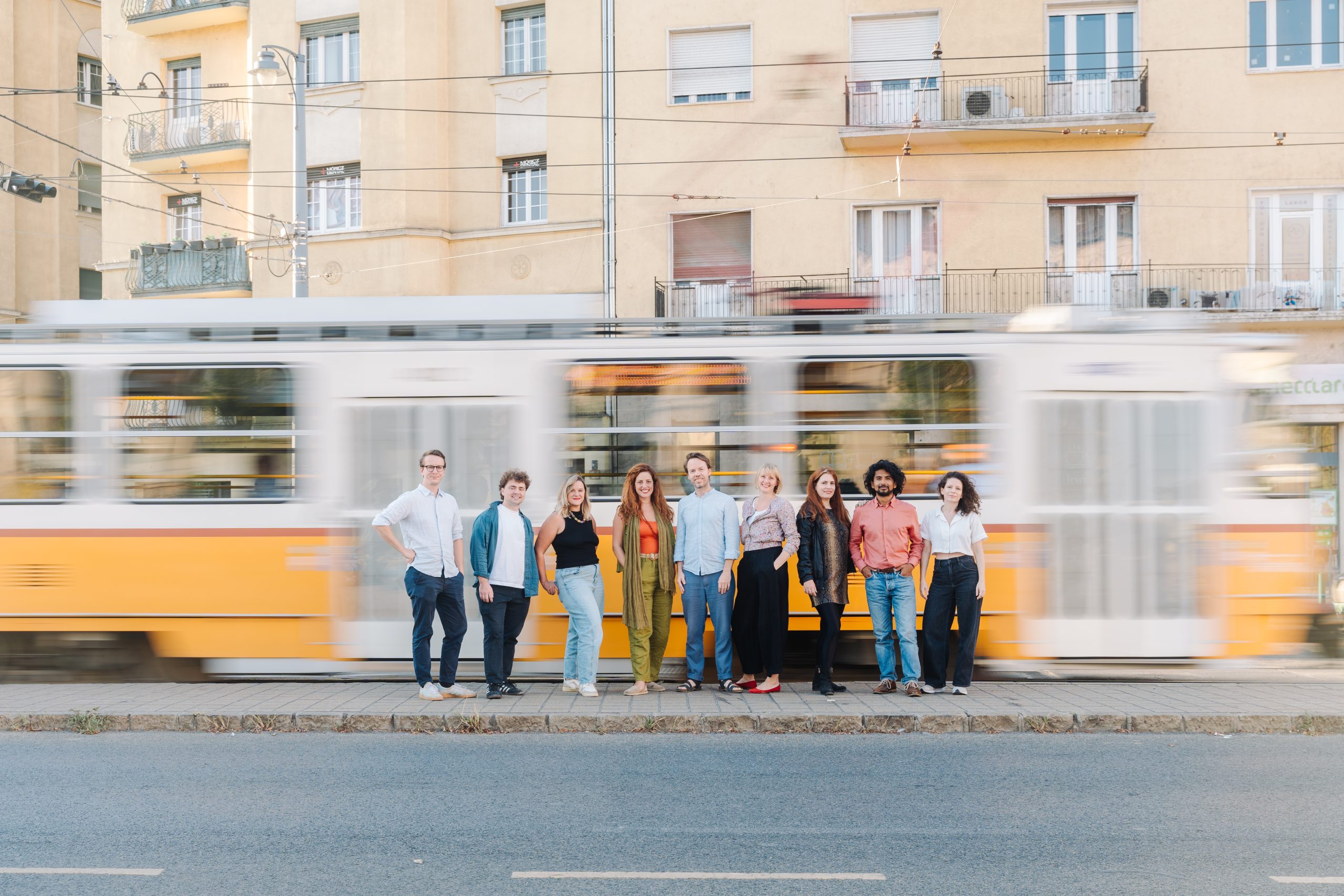
Who are we?

We’re researchers, urban policy experts, citizen initiative advocates, storytellers, specialists in urban regeneration, cultural development, community participation, deliberative democracy, local economic and policy development, social innovation and communication. From research to policy design, from community engagement to consultancies, from documentaries to books, from workshops to conferences – our impact is manifold. We are present in three European capitals (Rome, Vienna and Budapest) and we speak ten languages that give us access to local contexts and dilemmas across Europe. 

We're just us...

Daniela Patti is a co-founder of Eutropian. She is an Italian-British architect and urban planner, has studied in Rome, London, Porto and holds a Ph.D. in urbanism from the Technical University of  Vienna. Her recent research and projects’ interest has been on the governance of peri-urban landscape, the revitalisation of local food markets, economic models for community-based urban development and strategies to tackle urban poverty. She regularly works with the URBACT, Urban innovative Actions, the International Urban Cooperation and Urban Agenda on Urban Poverty  programs. She worked for the Rome Municipality in 2014-15, since 2012 she is board member of the Wonderland Platform for European Architecture and was a researcher at the Central European Institute of Technology in 2010-14.

Levente Polyak is urban planner, researcher, community advocate and policy adviser. He has worked on urban regeneration programmes for the New York, Paris, Rome, Vienna and Budapest municipalities. He taught at MOME and BUTE (Budapest) and TU Wien and was visiting fellow at Columbia University and the ENSA Paris-Malaquais and holds a PhD in Sociology from the Central European University. He is member of KÉK (Budapest) and board member of Wonderland (Vienna). He has been working as expert in URBACT networks (Temporary Use as a Tool for Urban Regeneration, Interactive Cities, ACTive NGOs, RiConnect, CO4CITIES) and Urban Innovative Actions projects (Curing the Limbo Athens, DARE Ravenna, CUP 4 Creativity Újbuda), designing learning trajectories and supporting knowledge exchange among cities.

Sophie Bod is a project manager and communications specialist who combines an academic background with years of hands-on experience in the arts and non-profit sector. She holds a BSc in Communications & Media Studies from the University of London, an MA from the Department of Religions and Philosophies at SOAS, and a diploma in human rights. She has worked with UK cultural institutions, NGOs and some of the country’s largest charities, leading advocacy, research, and digital and offline campaigns that mobilise and engage diverse audiences. At Eutropian, she oversees communication for the organisation and its European projects, coordinating campaigns, content and events, and she is co-editor of Cooperative City Magazine.

Stefanija Hrle Aiello is a researcher in Eutropian’s Rome team, working at the intersection of law, urban governance, sustainability and social innovation. Originally from Serbia, she holds a PhD in Law and Innovation from LUISS University and an MA in European and Comparative Law from Sapienza University of Rome. Her research focuses on urban commons, participatory and polycentric governance and community empowerment, with work spanning energy communities, cultural heritage and community-led regeneration. Drawing on her experience as a legal and compliance officer, she brings a comparative legal perspective to urban challenges. She is also a classically trained musician, opera singer and pianist.

Jorge Mosquera is an Italian-Ecuadorian architect and urban researcher specialising in urban regeneration and social innovation. He began working on urban planning and policy in 2015, joining a regeneration process for confiscated assets in the historic centre of Genoa, where he coordinated street art workshops and advocated for urban and social regeneration. In Barcelona he worked with Platoniq, researching digital and urban commons and platforms such as Decidim and Goteo. He now works on research, communication and co-creation methodologies in European projects, including the regeneration of urban voids in the Danube Region and Urban Innovative Actions. He is also a PhD candidate at IUAV University of Venice, researching social impact assessment in urban regeneration.

Livia Marschall is an anthropologist and cultural manager based in Budapest, working at the intersection of research, art, and community engagement. Currently, she supports community-led co-creation processes in urban transformation. Since 2021, she has managed EU-funded transnational projects on cultural rights, civic participation, and socially engaged artistic practices. In 2025, she was Community Mediator on OFF-Biennále Budapest’s participatory planning project and contributed to the ERIACNET4EU initiative on Roma inclusion at the European Roma Institute for Arts and Culture. Before that, she also worked as a curator at Gallery8 – Roma Contemporary Art Space. She holds MA degrees in Cultural Anthropology and in English Language and Literature from Eötvös Loránd University (ELTE).

Bernhardur Magnusson McComish is a researcher and human geographer working with Eutropian on urban research, municipal exchanges and heritage projects across Europe, including the Good Cities project. He holds a BA in Religious Studies from Bates College in the United States, where his thesis explored theological approaches to climate change, and an MSc in Human Geography from Lund University in Sweden. His master’s research examined Rome’s housing cooperative sector and housing affordability. His interests lie in housing regimes, social infrastructure and community-led initiatives, from cooperative housing to energy and residential commons, and he has represented Eutropian at workshops and events in cities such as Bilbao, Prato and Budapest.
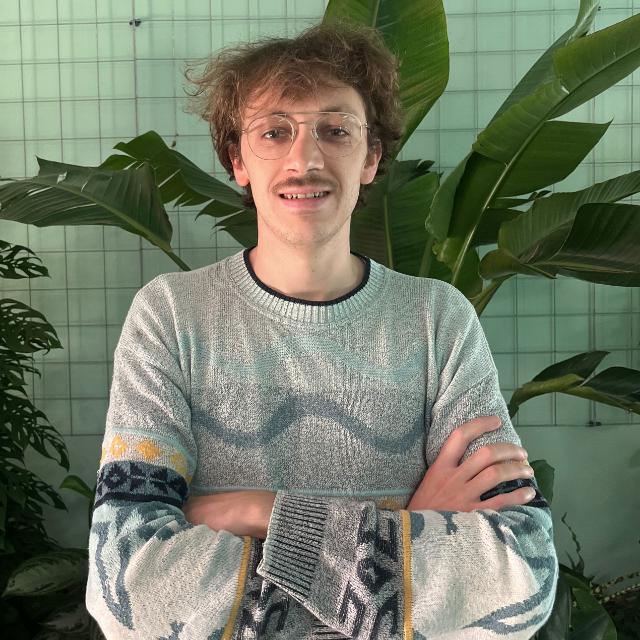


Dora Kondora is a communications specialist, community manager, and sustainability advocate based in Budapest, Hungary. With a diverse career spanning both corporate brand management and non-profit community development, she currently applies her expertise to urban environments as a communications specialist for KÉK (Contemporary Architecture Centre). She has long been a driving force behind Szatyor Association and Szatyorbolt, promoting ethical consumerism, local food systems, and social entrepreneurship through volunteer management and media coordination. Her work bridges the gap between marketing strategy and civic action, focusing on sustainable urban development, international placemaking, and building inclusive local communities.
 

Christian Grauvogel is co-founder and managing director of Transformati.on 2050, a Berlin-based non-profit working towards a just transition in urban and regional development, energy and mobility. The organisation leads participatory processes, advises municipalities on the energy transition and develops community-led projects such as Koop Wind and Co-PED. Christian has more than ten years of experience in participation and dialogue, with skills in facilitation, moderation, stakeholder engagement and knowledge transfer, and has led several civil society organisations. He was previously Head of Dialogue and Knowledge Transfer at the Alexander von Humboldt Institute for Internet and Society (HIIG) in Berlin, where he ran multi-stakeholder dialogues across four continents.

Giovanni Pagano graduated in Urban Environmental Management, specialising in Land Use Planning, at Wageningen University & Research in the Netherlands. Since then he has collaborated with Eutropian, working with research institutes, international networks and public administrations on research and action projects on urban planning and policy. He has also worked with CURSA on the Food Atlas and Food Policy of the Metropolitan Region of Rome, with Fondazione per il Futuro delle Città on urban regeneration and ecological transition, and with the LAND Research Lab. He is currently a PhD candidate in Urban Studies at the University of Milano-Bicocca, using ethnographic methods to study how citizens’ committees mobilise around urban planning.
 

Subscribe to our joint NEWSLETTER for

EUTROPIAN &
COOPERATIVE CITY MAGAZINE

sub-mail-grey.png